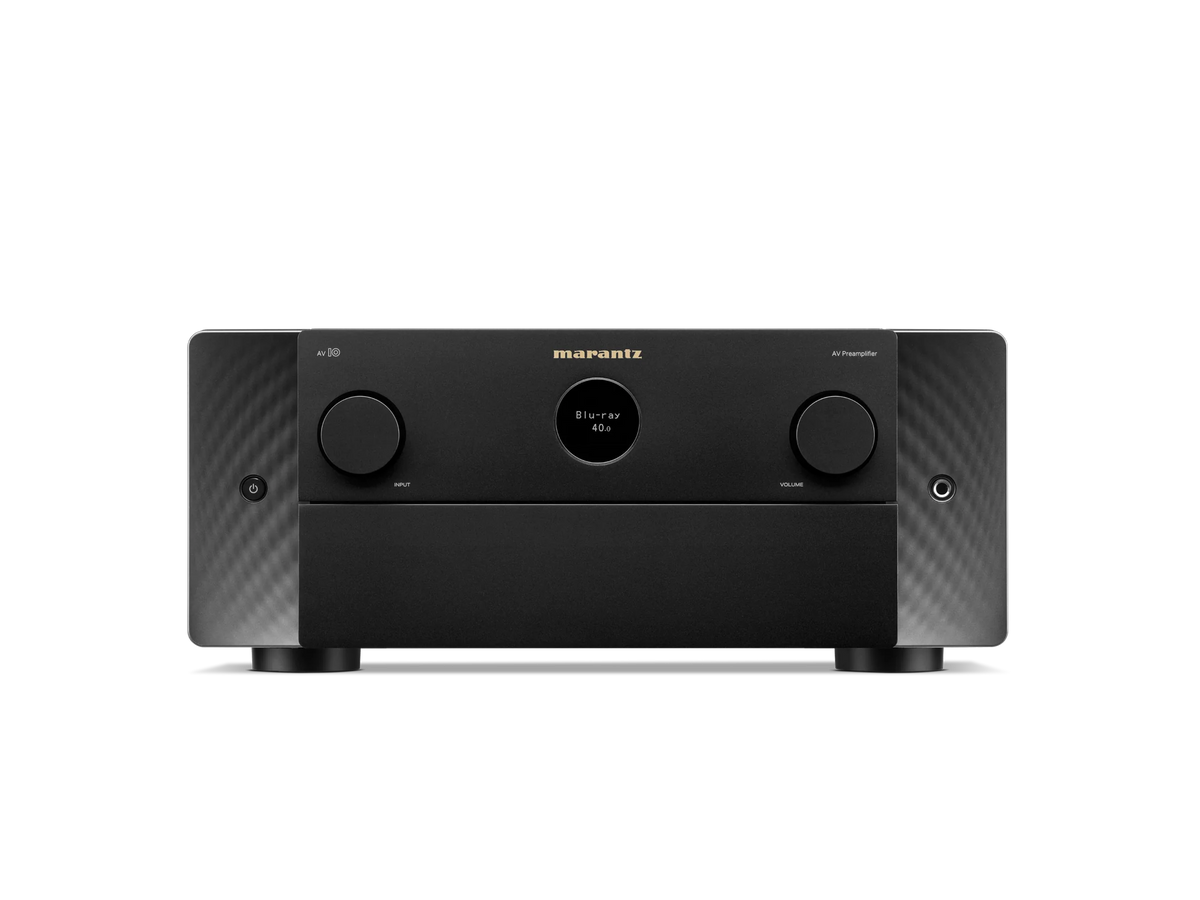
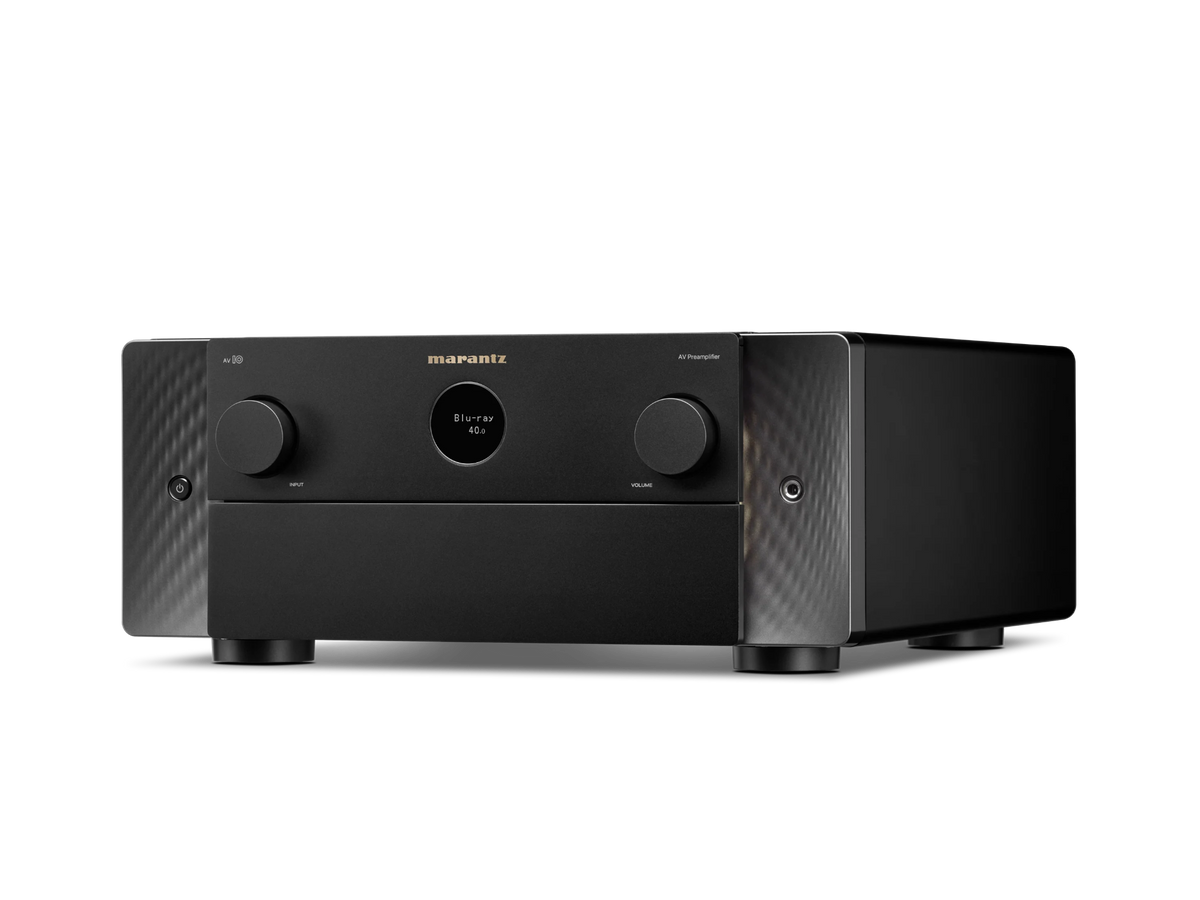
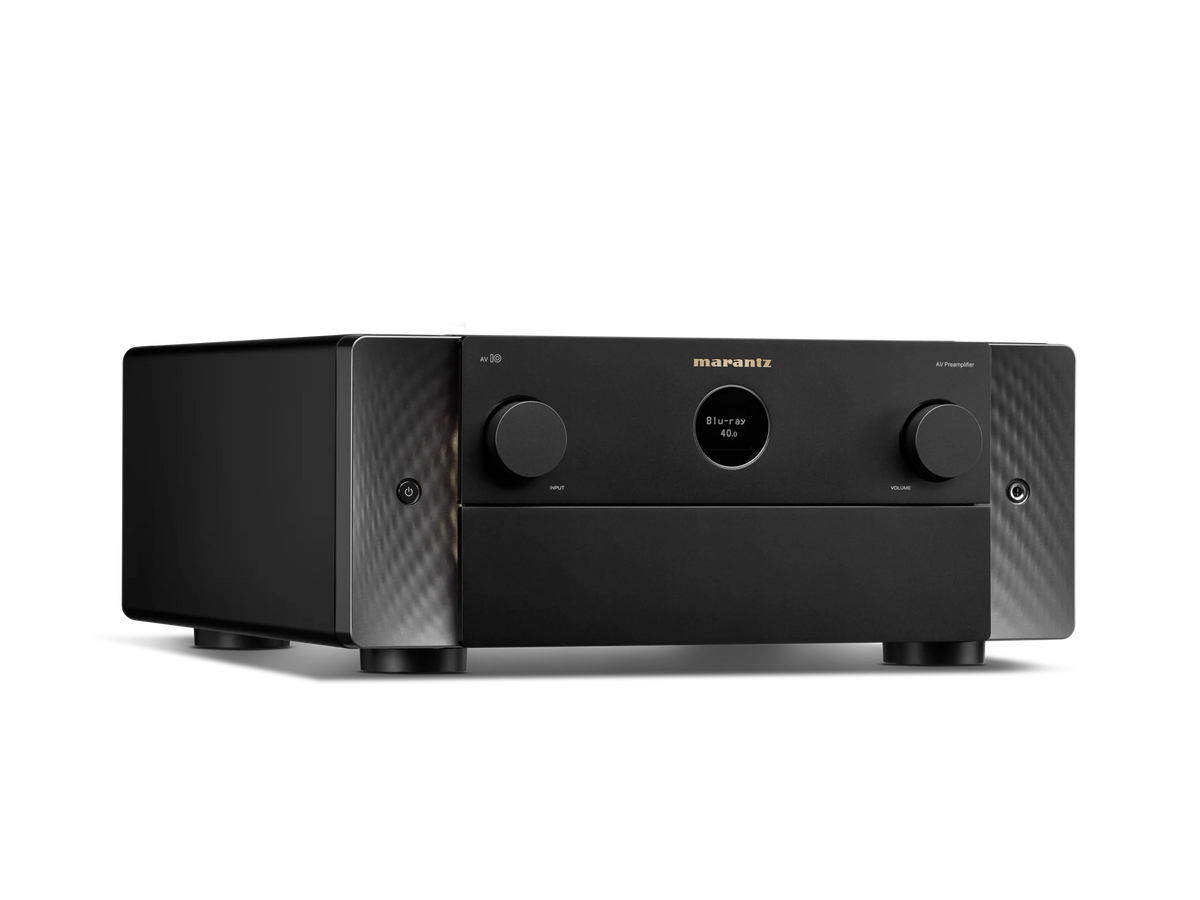
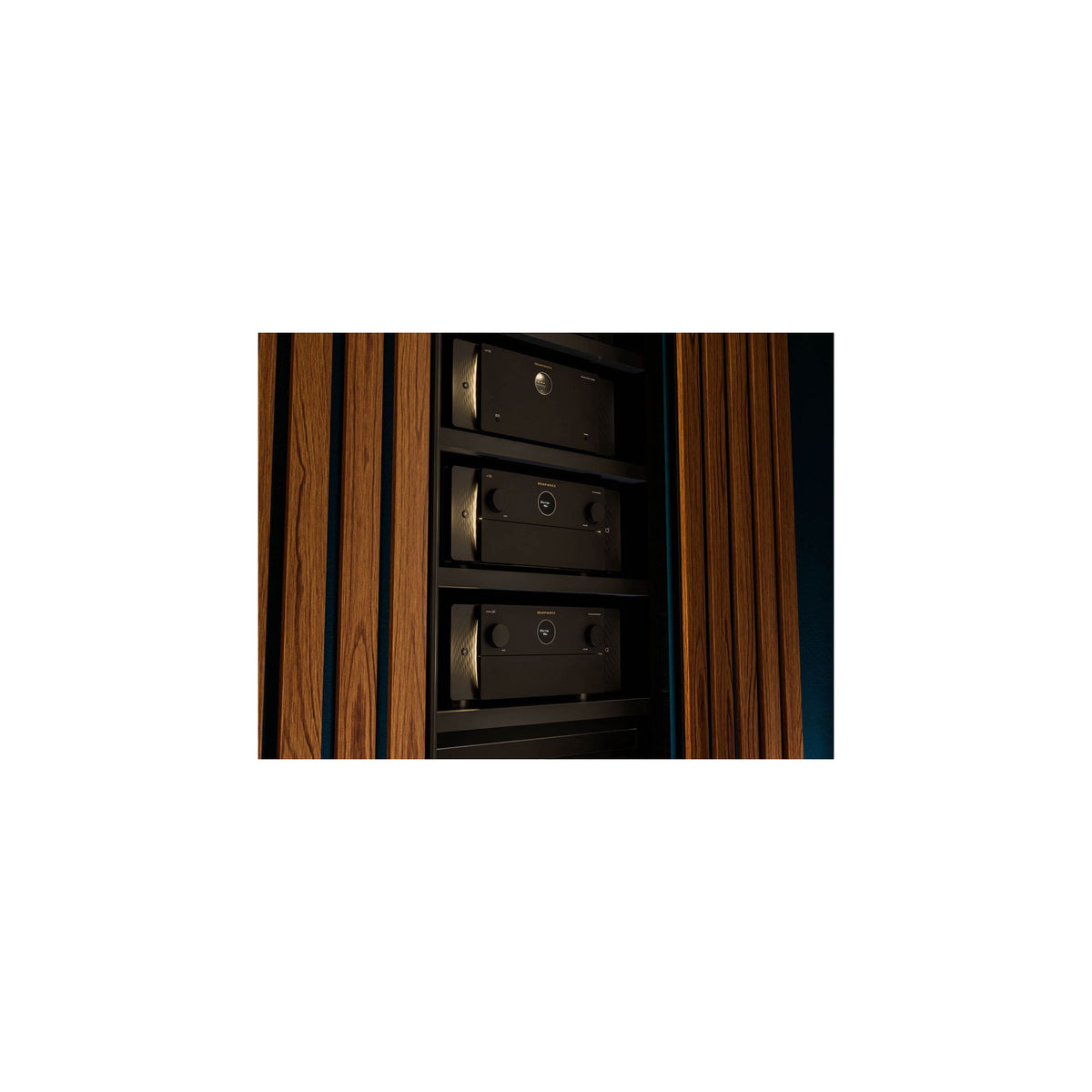
AV 10: 15.4-channel control for a maximum-scale dedicated theatre
A balanced processor with seven 8K HDMI inputs, four independent subwoofer outputs and HEOS, designed without internal power amplifiers.
AV 10 separates processing from power. Decoding, room correction, video switching and volume remain in a dedicated chassis, while AMP 10 drives the loudspeakers. Its 15.4-channel capability places it al vertice dei processori Marantz and determines the scale of layout it can manage without replacing the processor.
Key features
- 15.4-channel processing
- seven 8K-compatible HDMI inputs
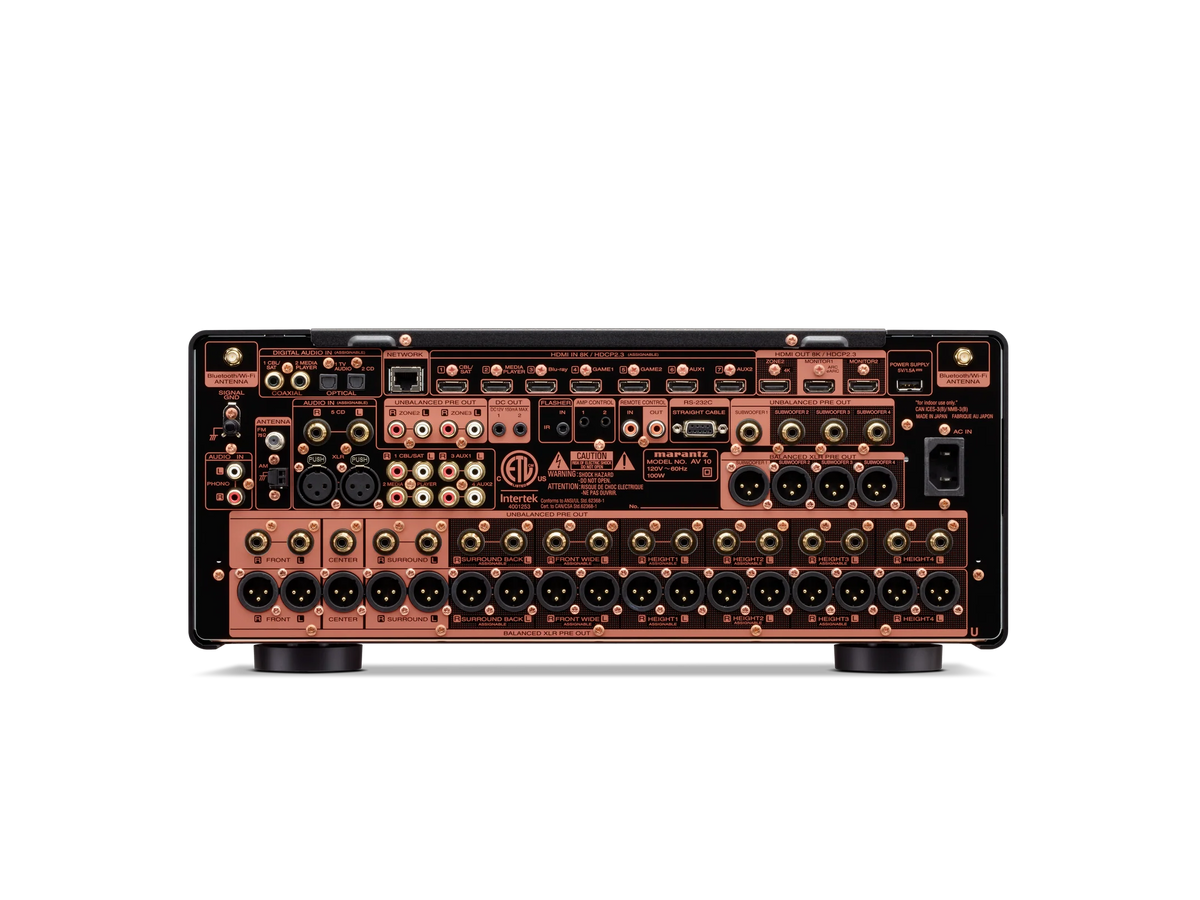
- balanced pre-outs for every channel
- four independent subwoofer outputs
- Dolby Atmos, DTS:X Pro and AURO-3D
- HEOS and Audyssey MultEQ XT32
Fifteen paths for an uncompromised room
AV 10 belongs where the plan includes a front stage, multiple surrounds, width speakers and several overhead pairs. Its 15.4 outputs need not all be occupied on day one, but they prevent the control system being redesigned as the theatre grows. In a simpler room, that freedom would remain expensive dormant capacity.
Four bass feeds across many seats
A reference theatre needs consistent bass between distant seats, not merely greater pressure. Four independent subwoofer paths allow separate delay, level and correction. They provide the foundation for a deliberate multi-sub array in which each cabinet addresses a different modal region.
Balanced all the way to the amplifiers
XLR outputs for every channel provide the natural link to AMP 10, particularly with remote racks or long cable runs. HDAM modules handle the analogue stage while the power amplifier remains free of processing duties. This division is the engineering reason to choose separates over an integrated receiver.
Calibration as an engineering phase
Audyssey MultEQ XT32 supplies the initial route and Dirac Live can extend optimisation. With fifteen channels, speaker naming, mounting heights and microphone positions should be documented. HEOS remains convenient, but the accuracy of the acoustic map matters more here than casual multiroom playback.
Position within the family
AV 10 adds two channels over AV 20 and four over AV 30. It is justified when the plan genuinely uses a 15.4 matrix or needs maximum assignment freedom. AMP 10 follows with 16 power channels in one chassis. For an 11.4 layout, AV 30 applies the same separates principle at a more rational scale. The decision should be made from the room plan: fifteen useful channels, four subwoofer positions and space for sixteen power stages. Only a design that assigns every output turns the additional capacity into an audible benefit.